Leather trainers are easy to wear every day, which is exactly why they start looking tired so quickly. Pavement dust settles into stitching, rain leaves marks around the edges, and creases collect grime where the shoe bends. Fortunately, leather trainers care rarely requires an expensive kit. A gentle routine, matched to the material, often works better than an occasional aggressive deep clean.
The key is to treat the upper, sole and lining differently. Leather needs controlled moisture; rubber soles can tolerate more scrubbing. Check the manufacturer’s guidance and identify whether your trainers use smooth leather, coated leather, suede, nubuck or synthetic material before cleaning.
Gather the right tools first
For most smooth-leather trainers, you need two microfibre cloths, a soft brush or soft toothbrush, lukewarm water and a cleaner approved for the shoe’s finish. Mild soap may suit some finished leather, but a dedicated product is preferable when the finish is uncertain.
Inspect the toe, heel, seams and flex points. If the surface is flaking or stitching is loose, avoid wet cleaning there and consider a repair. Always test any unfamiliar cleaner in a discreet area, then wait until that spot dries before continuing.
How to clean leather trainers safely
Brush away dry dirt
Remove the laces, then gently brush dust and dried mud from the upper. Pay particular attention to the join between leather and midsole, where grit can scratch the finish as you wipe. If mud is still wet, allow it to dry naturally before brushing.
Wipe the upper without soaking it
Lightly dampen a clean cloth; it should never drip. Apply a little compatible cleaner according to its directions, then wipe one leather panel at a time. Clean around eyelets and seams with a soft brush, using minimal moisture. Remove cleaner residue with another lightly damp cloth if instructed.
Do not dunk trainers in water or attack scuffs with a stiff brush. Excess moisture can affect leather, linings and adhesives, while vigorous rubbing may remove the colour or protective coating.
Handle soles and laces separately
For rubber midsoles, use a soft brush with a little mild, soapy water. Concentrate on the dirt line around the edge, keeping the solution off the leather upper. Abrasive sponges may mark coloured surfaces, so avoid dragging them across the shoe.
Wash removable fabric laces as their care labels permit and let them dry completely. Remove insoles to air if possible, but do not soak glued or padded parts without manufacturer approval. For stubborn white marks, advice on cleaning white trainers can help distinguish leather-safe methods from fabric cleaning.
Dry leather trainers slowly
After trainer cleaning, loosely stuff the shoes with plain, unprinted paper to support their shape and absorb moisture. Place them in a ventilated room, away from radiators, hairdryers and direct sunlight. Replace damp paper as needed and allow the lining and tongue to dry fully before wearing them.
Heat can stiffen leather, distort components and weaken some adhesives. The outside may feel dry before the inside is ready, particularly after a wet walk.
When conditioning helps, and when it does not
Some uncoated natural leather benefits from occasional conditioning. Once clean and dry, apply a very thin layer of a suitable leather conditioner, following the label. Test first: conditioners may darken the leather or alter its sheen.
Many white lifestyle trainers have a coated finish that does not absorb conventional conditioner well. Synthetic leather, patent finishes, suede and nubuck also need different products. Avoid household oils, heavy polish and moisturisers that may leave residue or discolour the upper. Good leather shoe care starts with identifying the material, not applying more product.
Protect leather sneakers from daily wear
A water-repellent treatment formulated for the exact finish may help resist light splashes and dirt. Spot-test it, apply it according to the label in a well-ventilated area and allow the full recommended drying time. It does not make ordinary trainers waterproof, so prolonged rain and puddles remain best avoided.
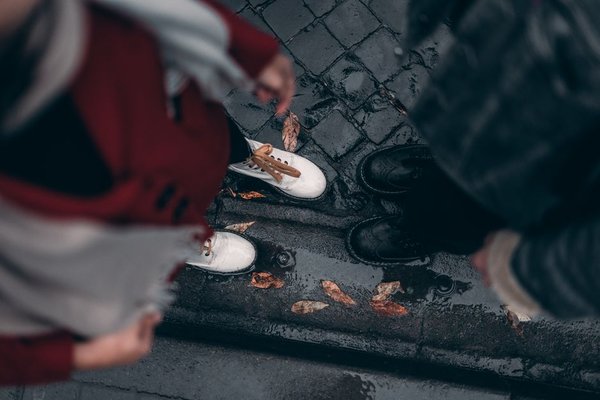
Picture a rainy commute in white leather trainers. At home, let gritty mud dry, brush it off, then wipe the upper with a barely damp cloth. Clean the rubber edge separately and air-dry the pair before storing it. Five minutes of attention after messy wear can prevent dirt becoming embedded in creases and stitching.
If you wear trainers daily, rotating pairs gives damp footwear an opportunity to air. Choosing suitable shoes for rainy weather is also worth thinking about before the next wet commute.
Deal with scuffs, spots and odours carefully
Dark scuffs on pale leather
Start with a soft, slightly damp cloth. If the mark persists, try an approved leather cleaner sparingly. A superficial transfer mark may lift; a scratch that has removed pigment may require colour restoration or professional help. Do not use abrasive erasers on the leather itself.
Rain and salt residue
Blot fresh moisture rather than rubbing it in. Once dry, gently remove loose residue and follow with a product suitable for that finish. Avoid flooding one small patch to remove a water ring; uneven wetting may produce a larger mark.
Unpleasant smells
Loosen the laces, remove detachable insoles and ventilate the shoes. Clean linings only as the manufacturer directs. If odours return, check whether damp socks or wearing the same pair every day are contributing.
Make maintenance a small habit
After an ordinary outing, brush away grit and wipe visible splashes. Check the soles and flex points every few wears, reserving deeper cleaning for accumulated dirt. Reapply a compatible protector only as its instructions recommend; repeated heavy applications can cause unwanted build-up.
Store clean, fully dry trainers somewhere cool and ventilated, with light paper stuffing or suitable shoe trees to preserve their shape. Avoid sealing damp shoes in bags. A guide to storing shoes between seasons can also be useful for pairs worn less often.
Frequently asked questions
Can leather trainers go in a washing machine?
Generally, no. Washing machine agitation and prolonged soaking can affect finishes, shape and adhesives. Unless the manufacturer explicitly permits it, clean leather trainers by hand.
Can I use washing-up liquid on leather trainers?
A very diluted mild solution may suit some coated leather, but strong detergents can dull or damage sensitive finishes. Use a compatible leather cleaner when possible, and always spot-test.
How often should I condition leather sneakers?
There is no fixed schedule. Condition compatible natural leather when it feels dry and its manufacturer recommends treatment. Coated or synthetic uppers may not need it at all.
Are suede trainers cleaned the same way?
No. Suede and nubuck can be marked or flattened by smooth-leather products. Use a dedicated suede brush and suitable cleaner rather than ordinary leather conditioner.
Keep it gentle and consistent
The most effective leather trainers care is preventive. Remove grit, use minimal moisture, dry naturally and choose products that suit the actual finish. Small, regular efforts help your favourite pair look good for longer without risking damage from harsh cleaning.