The right lingerie can change how a favourite outfit feels, not because it changes your body, but because it stops the constant tugging, pinching and adjusting. A bra band that rides up can affect the way a top hangs. Briefs that roll at the waist can make sitting in a dress uncomfortable. This plus size lingerie fit guide for UK shoppers explains what to check before settling on everyday essentials.
Comfort is personal, but there are useful fit clues. You should be able to breathe normally, move freely and feel supported without painful pressure. The size on the label is only a starting point.
Check the bra band first
The band supplies much of a bra’s support. It should sit roughly level around your ribcage, feel secure and stay in position when you raise your arms. A back band that climbs upwards is often too loose; one that restricts breathing or causes persistent pain needs reassessment.
Try a new bra on its loosest hooks so there is room to tighten it as the elastic relaxes. Then sit, reach and bend. A bra that looks fine when you stand still may shift during normal movement.
Look at the cups and wires
Breast tissue should fit inside the cups without spilling over the edges or being pressed by underwires. In a wired style, the wires should rest on the ribcage rather than on breast tissue. The centre panel usually lies close to the chest, although breast shape and bra design can affect this.
Gaping cups do not always mean they are too large. Rigid moulded cups may simply be the wrong shape. Stretch-lace or seamed styles can accommodate differences in fullness. If one breast is larger, fit that side first and adjust the other carefully.
Let straps do their share, not all the work
Straps should stay put without digging into your shoulders. If you need to pull them very tight to feel supported, revisit the band fit. For straps that repeatedly slip, a different shoulder placement or back design may help.
Understand plus-size bra sizing in the UK
A plus size bra sizing guide is useful for finding a starting point, but band and cup sizes work together. A cup letter does not represent one fixed volume across all bands. UK cup sequences may also differ from those used by international brands, so check the seller’s UK chart.
Consider a 38F with a band that feels loose but cups that appear suitable. Trying a 36FF, a neighbouring UK sister size, can retain approximately similar cup volume with a firmer band. Conversely, 40E offers a roomier band with comparable cup volume. Neither change guarantees a fit because brands and cup shapes vary.
Use home measurements to narrow your options, then judge the actual garment on your body. A professional fitting, whether in a UK store or remotely, can help when several sizes seem plausible.
Match the bra style to everyday life
A comfortable plus size bra fit is not restricted to one style. A full-cup bra may provide coverage under a work blouse, a plunge may suit a lower neckline, and a non-wired bra may feel more flexible at home. Good support depends on fit and construction, not simply underwires.
Under fitted jersey, check cup seams and edges beneath the actual top. An ill-fitting smooth cup may gape more noticeably than a seamed one. Under looser clothes, breathability and stability might matter more than an invisible outline. For more outfit ideas, explore a guide to choosing bras for different necklines.
Give briefs the same attention
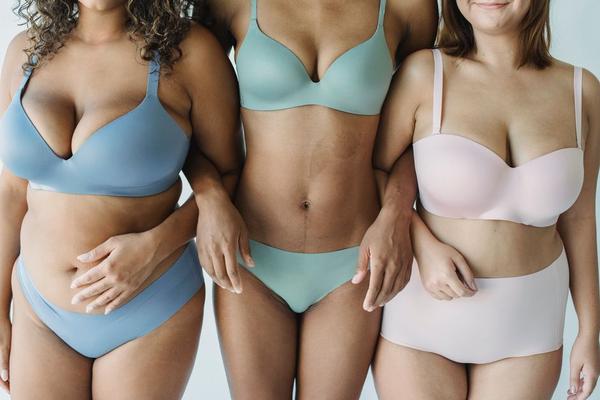
Curve underwear fit depends on rise, leg openings, fabric and coverage, not just waist size. Briefs should remain in place as you walk and sit. Tight leg openings, fabric bunching at the back and a waistband that folds repeatedly are all reasons to try a different cut.
A higher rise does not automatically stop rolling. If the waistband sits at a natural bend in your torso, it may fold every time you sit. Try a different rise or a softer, wider waistband before assuming you need to size up. Cotton-rich gussets and breathable fabric are useful everyday considerations.
Choose smoothing shorts without excessive compression
Smoothing shorts may help prevent thigh friction beneath dresses. Light shapewear can also change how fabric hangs, but it should never make breathing, sitting or moving uncomfortable. Buying a smaller size to increase compression often causes more rolling and irritation rather than a better fit.
The five-minute outfit test
Imagine dressing for a train journey followed by hours at a desk. Your bra and high-rise briefs look fine with a fitted dress while standing. Yet the waistband rolls as soon as you sit, and the bra back rises when you reach for a bag.
Test each layer separately. Raise your arms to check the bra band, sit down wearing just the briefs to locate the fold, then put the dress back on and walk around. A firmer bra band and a different brief rise may solve both problems without replacing the dress.
When ordering plus size lingerie in the UK, check size charts and returns rules first. Keep tags attached during an indoor try-on and compare a couple of sizes or cuts if needed. A side-view photograph can reveal a rising band that is hard to spot in a mirror.
Know when your fit has changed
Weight changes, pregnancy, hormonal shifts and ageing elastic can all affect fit. Reassess if a previously comfortable bra requires constant adjusting, cups suddenly wrinkle or briefs lose their stretch. You do not need to replace underwear on a rigid timetable; watch how it performs.
A plus-size clothing fit checklist and a guide to comfortable fabrics can help with the rest of your wardrobe. The goal is clothing that moves with your body, not clothing that hides it.
Frequently asked questions
How tight should a plus-size bra band be?
It should feel secure and stay level without restricting breathing or causing pain. A new band can feel firmer than a worn-out one, but it should still be comfortable when sitting and moving.
Why do bra cups gape when the band fits?
The cup might be too large or the wrong shape. Try another cup construction, such as a seamed or stretch-fabric style, before changing the band.
Should I size up if my briefs roll down?
Possibly, but rise and waistband design can be the real cause. Compare styles and check the fit while sitting rather than judging from a standing pose alone.
Can a non-wired bra provide good support?
Yes. Well-designed non-wired bras can be supportive, although they may feel different from wired styles. Look for a stable band, suitable cups and comfortable straps.
Let comfort guide the final choice
Reliable everyday foundations should not demand constant attention. Check the band before tightening straps, assess cup shape as well as size, and test briefs while sitting. When your lingerie fits your movements and your wardrobe, getting dressed becomes simpler and more comfortable.